How to Select a Needle
What Kind of Project will you be doing?
The task determines the type of needle you will need.
General Sewing and Mending
Basic mending, sewing buttons, and clothing repairs require a clean, sharp pierce. Our mid-sized Sharps (sizes 6 or 7) provide the perfect balance of length and fine diameter for everyday fabrics.
Embroidery
Whether embellishing towels or creating detailed surface embroidery, you need room for thicker threads. Choose our Embroidery Eye needles or long straw needles to comfortably handle multiple strands of floss.
Cross Stitch & Needlepoint
Counted-thread work requires a blunt tip that glides smoothly through Aida cloth or canvas grid holes without splitting the fibers. Our Tapestry Needles protect your fabric and keep your stitching perfectly uniform.
Beading
Stringing tiny seed beads requires ultra-thin diameters. Choose a flexible, blunt needle for jewelry making, or a specialized thin Sharp if you are sewing decorative beadwork directly onto fabric.
Quilting
From executing the perfect "rocking stitch" with short Betweens to burying pesky thread tails with a side-threading Chenille, we have the specialized tools to elevate your quilting precision.
Machine Sewing
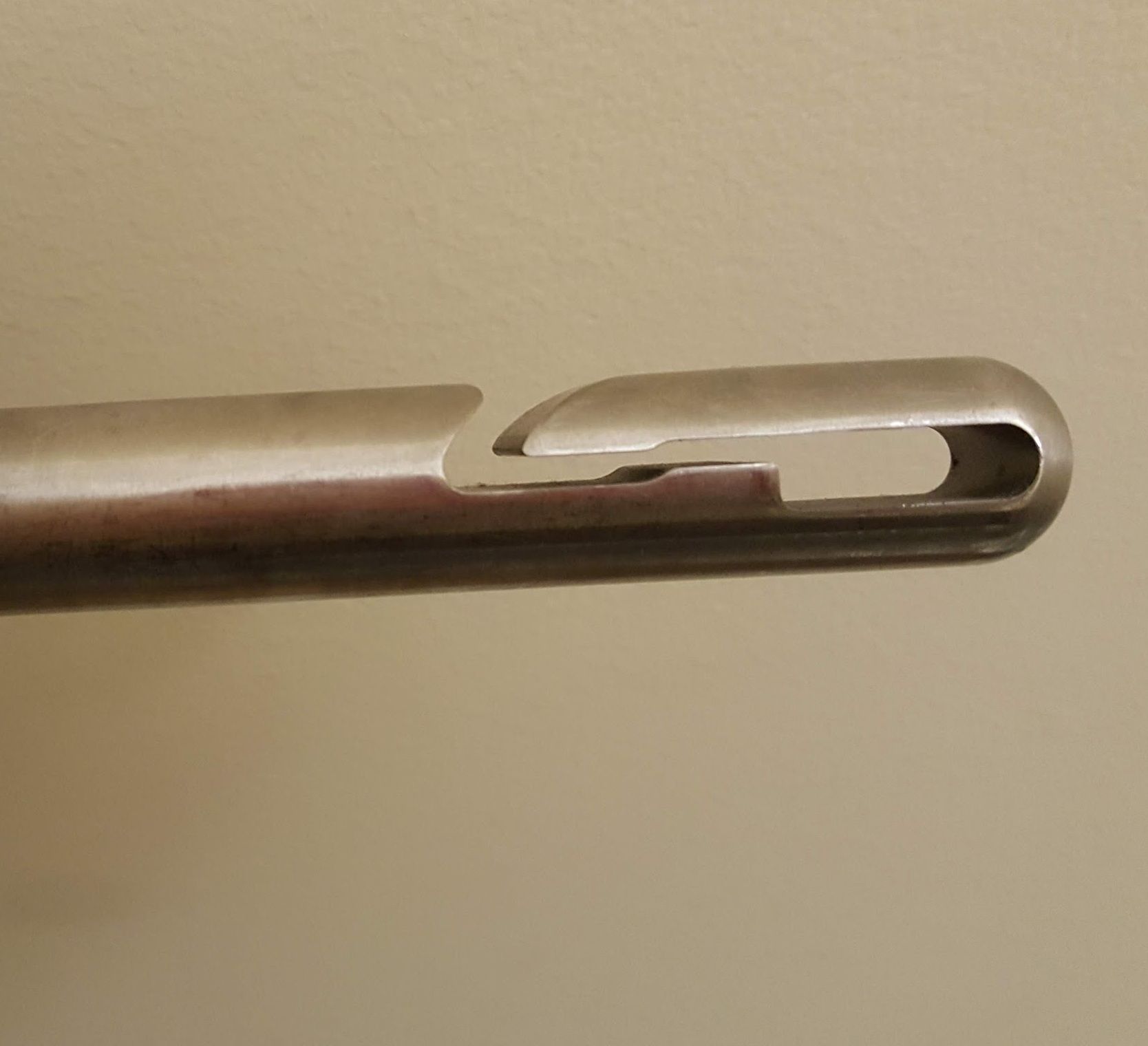
Stop straining your eyes at the sewing machine. Our specialized Universal Machine Needles feature our patented side-threading slot so you can re-thread your machine in a split second.
Hypoallergenic Sewing
Say goodbye to itchy, irritated skin. If you have a sensitive touch or a nickel allergy, our exclusive STAINLESS line features traditional-eye needles crafted from 100% surgical-grade stainless steel.
Heavy-Duty & Canvas Projects
Working with dense materials like denim, canvas, or upholstery requires pure structural strength. Our premium Size 4 Sharp is engineered to pierce heavy-duty fabrics without bending or breaking.
What kind of Thread will you be working with?
The thickness and complexity of the thread determines the size and type of eye you will want.
All-Purpose Thread
Used for everyday mending and clothing repairs, standard polyester or cotton all-purpose thread is relatively thin. Pair it with a Spiral Eye® size 6 or 7 Sharp for a seamless, effortless sewing experience.
Embroidery Floss
Embroidery floss is comprised of multiple loose strands that fray easily when pushed into traditional eyes. Our side-threading Chenille or blunt Tapestry needles let you slide multiple strands right in without shredding.
Perle Cotton
Perle cotton is a beautiful, twisted thread popular in embroidery and quilting. Because it is thicker and cannot be separated into strands, it pairs best with our larger-slotted Tapestry Needles or Chenille Needles.
Diverse Yarn
Heavy yarns fray instantly when pushed into small spaces. Our specialized, heavy-duty side-threading Tapestry needles handle various yarn weights easily, eliminating the need for separate wire threaders.
Invisible & Monofilament Line
Monofilament and invisible threads are slippery, springy, and notoriously difficult to knot or thread. Using a fine Spiral Eye® Sharp snaps the line into place instantly, giving you maximum control over hidden stitches.
Quilting Threads
Quilting involves switching between heavy hand-quilting threads, delicate piecing threads, and thick floss for tying. Make sure to choose a needle whose eye matches your specific thread weight to prevent hand strain.
Machine Sewing Threads
Built to handle high speeds, our Universal Machine Needles accommodate standard sewing and machine-quilting threads. The side-slot makes re-threading your machine effortless when changing thread colors.
Silk & Delicate Specialty Threads
Luxury threads like fine silks, metallics, and rayon fray under the slightest friction. The patented smooth loop inside our premium needles protects delicate fibers from shredding as they pass through your fabric.
Some Helpful "Pointers"
Pro-tips to help you choose the right tools and keep your projects stress-free.
General Sewing & Mending
The Global Standard: If you only own one needle, make it a size 6 or 7 Sharp. This is the most universally used size for everyday mending and button repairs.
Sizing is Reversed: Needle sizing works backward from what you would expect. A size 4 is long and thick, while a size 12 is ultra-thin and short.
The Wire Secret: A needle’s size tells you how many times the wire was stretched during manufacturing. A size 12 wire was drawn 12 times, making it much thinner than a size 6.
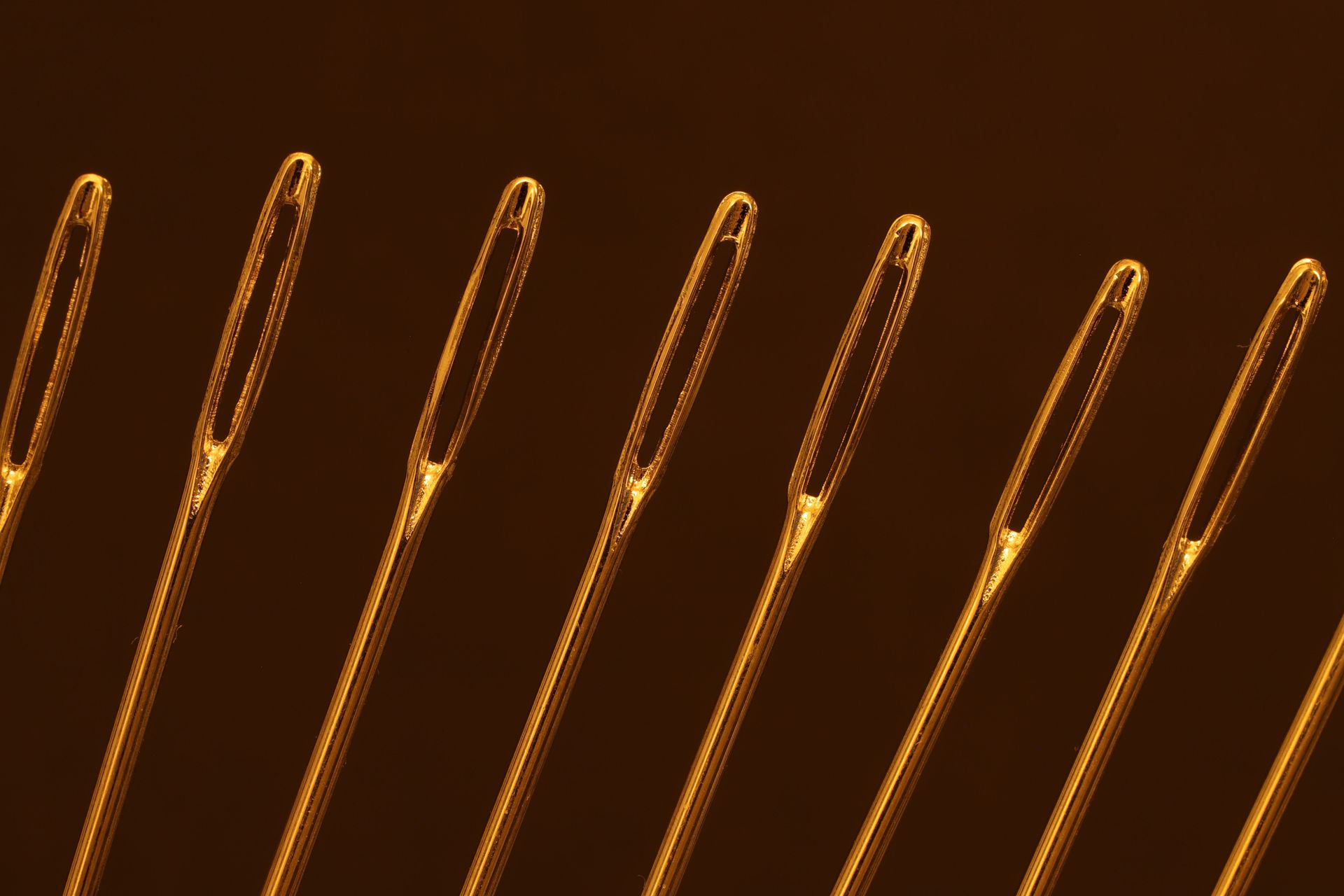
The Eye Rule: The thinner the needle diameter, the smaller the eye. To make threading easier on finer needles, premium manufacturers elongate the eye—often called an Embroidery or Long eye.
Embroidery
Choosing the Right Point: Working with standard embroidery floss on cotton fabrics? A premium Sharp (sizes 4 to 6) is your best friend. The size 4 is slightly longer, making it much easier to hold if you have stiff or arthritic hands.
Handling Heavier Threads: If you are upgrading to thick Perle cotton or using more than three strands of floss at once, skip the standard sharps and switch directly to an Embroidery Eye or a side-threading Chenille needle to prevent thread friction.
Cross Stitch & Needlepoint
Protect Your Fabric: For counted-thread projects on grid materials like Aida cloth, you want a blunt tip that glides smoothly into the pre-existing holes.
The Tapestry Needle: Blunt-tipped needles are called Tapestry needles. Using them ensures you never accidentally split the fabric fibers, keeping your grid stitches perfectly uniform and straight.
Beading
Clear the Clearance: Sewing tiny seed beads requires an ultra-thin diameter. The entire body of the needle—including the eye—must be narrower than the microscopic hole inside the bead.
Sizing Guide:
- Size 11 Seed Beads: Pair with a size 12 needle.
- Size 15 Seed Beads (Ultra-Small): Require a size 12 or 13 needle.
The Side-Slot Advantage: Threading tiny beading eyes is notoriously frustrating. The Spiral Eye® Beading needle solves this with a precision side-slot, allowing your thread to snap right in.
Quilting
The Rocking Stitch: When you hear quilters talk about "Quilting Needles," they are usually referring to Betweens. These are intentionally short, stiff needles designed to handle rapid, precise hand-stitching through heavy batting.
Burying Thread Tails: The easiest way to hide your loose ends is with a side-threading needle. For heavy workloads, use a sturdy Size 24 Chenille Spiral Eye®. For quick, occasional fixes, a Size 6 Spiral Eye® works beautifully.
Binding Your Edges: When sewing down your final binding, comfort is everything. Reach for a Sharp needle that feels natural in your fingers—most quilters swear by a size 8, 10, or a classic Size 6 Spiral Eye®.
Diverse Yarns
Stop the Fray: Because knitting and crochet yarns are made of multiple loose, spinning plies, they instantly fray and split when you try to force them into a traditional needle eye.
The Stress-Free Solution: Skip the frustrating wire threaders entirely. A heavy-duty, side-threading Tapestry needle allows you to drop the entire bulk of the yarn over the side slot, snapping it into place instantly without separating the plies.
Machine Sewing
Effortless Machine Threading: You don't have to give up side-threading technology when you switch to machine work! Our specialized Size 80/12 Universal Machine Needles bring our patented, easy-thread system straight to your sewing machine sewing arm.
Blog