How to Select a Needle
What Kind of Project will you be doing?
The task determines the type of needle you will need.
General Sewing and Mending
General sewing and mending tasks usually need a sharp point on mid size needles.
Embroidery Work Varieties
Embroidery uses long straw needles, various Sew Right sizes, or Chenille options.
Cross Stitch & Needlepoint
Cross stitch and needlepoint use blunt tapestry needles to glide between weaves.
Precision Beading Projects
Beading requires thin needles. Choose sharp for embellishing or blunt for jewelry.
Multi-Task Quilting Needs
Quilters need tiny betweens, side threading needles for tails, and yarn needles.
What kind of Thread will you be working with?
The thickness and complexity of the thread determines the size and type of eye you will want.
All-Purpose Thread Choice
All purpose thread is used for most general sewing and uses a sharp needle.
Embroidery Floss Guidelines
Embroidery floss needs a blunt tapestry needle or a side threading needle.
Perle Cotton Fabric Uses
Perle Cotton is often times used in Embroidery. Also in Cross stitch work.
Diverse Yarn Thicknesses
Yarn thickness, mesh count, and your project type determine the needle size.
Invisible Line Solutions
Invisible thread can be difficult. Try specialty beading or baiting needles.
Complex Quilting Tasks
Quilters use all purpose, hand quilting, or embroidery floss for projects.
Some Helpful "Pointers"
This is the text area for this paragraph. To change it, simply click and start typing.
General Sewing & Mending
Shop NowGeneral sewing needles, often times called “sharps” are the go-to needle for basic mending tasks. They have a sharp point and a thin diameter.
- Personal preference dictates the length and diameter. If you only get one needle, get a size 6 or 7 Sharp. That is the most commonly used size in the world.
- Needle sizes are just the opposite of what you would expect. A size 8 is smaller than a size 6. A size 12 is really thin and short, while a size 4 is long and thicker.
- Needle sizing fact: The size of a needle is directly related to the size of the diameter of wire used to make the needle. This means a size 6 was “drawn” or stretched 6 times to make its diameter and the size 12 was “drawn” 12 times, making a smaller diameter needle. Different manufacturers use different diameter wire to start their process so there is a small variation of the diameter of a needle from manufacturer to manufacturer.
- Needle eye size is determined by a few things. If the diameter is thinner, the eye will be smaller. If the diameter is thicker the diameter will be bigger. So the higher the number the smaller the eye. As long as you are comparing the same shape eye. The manufacturer can make the hole longer, making it larger and easier to thread. The longer eyes are often called embroidery eyes.
- Chenille and Tapestry needles start out with a much thicker wire than regular sharps. That is why a size 24 Chenille is closer to the size 6 sharp than a size 12 milliner. The number still represents the number of times that wire was drawn. That is why a size 24 Tapestry is bigger than a size 28 Tapestry needle.
- Different brands vary slightly in diameter and length and shape of the eye, but for the most part: a size 6 or 4 or 12 is about the same size no matter the brand.
Embroidery
Shop NowEmbroider Pillow Cases or Towels?
Embroidery work on cotton material using two or more embroidery floss uses a “Sharp” needle. But if you want more than a few strands of embroidery floss or use the heavier Pearl Cotton thread you might want an Embroidery Eye Needle or a Chenille Needle.
- Most people like a size 6 or 4 Sharp for this task. The size 4 is a little longer and easier to hold with arthritic fingers.
- Mary Corbet has a wonderful article on choosing Embroidery needles.
Cross Stitch & Needlepoint
Shop Now- You want a blunt point on the needle for tasks where you want to make sure the needle does not split the threads of the material.
- Blunt needles are called Tapestry Needles. The size of the holes in the material generally dictates the size needle you want.
- Aida is a common material for Counted Cross stitch.
Beading
Shop Now- Sewing Seed beads requires super thin needles. The diameter needs to be smaller than the hole in the bead. Beading needles are blunt, but if you are sewing your bead onto cloth you will want a Sharp.
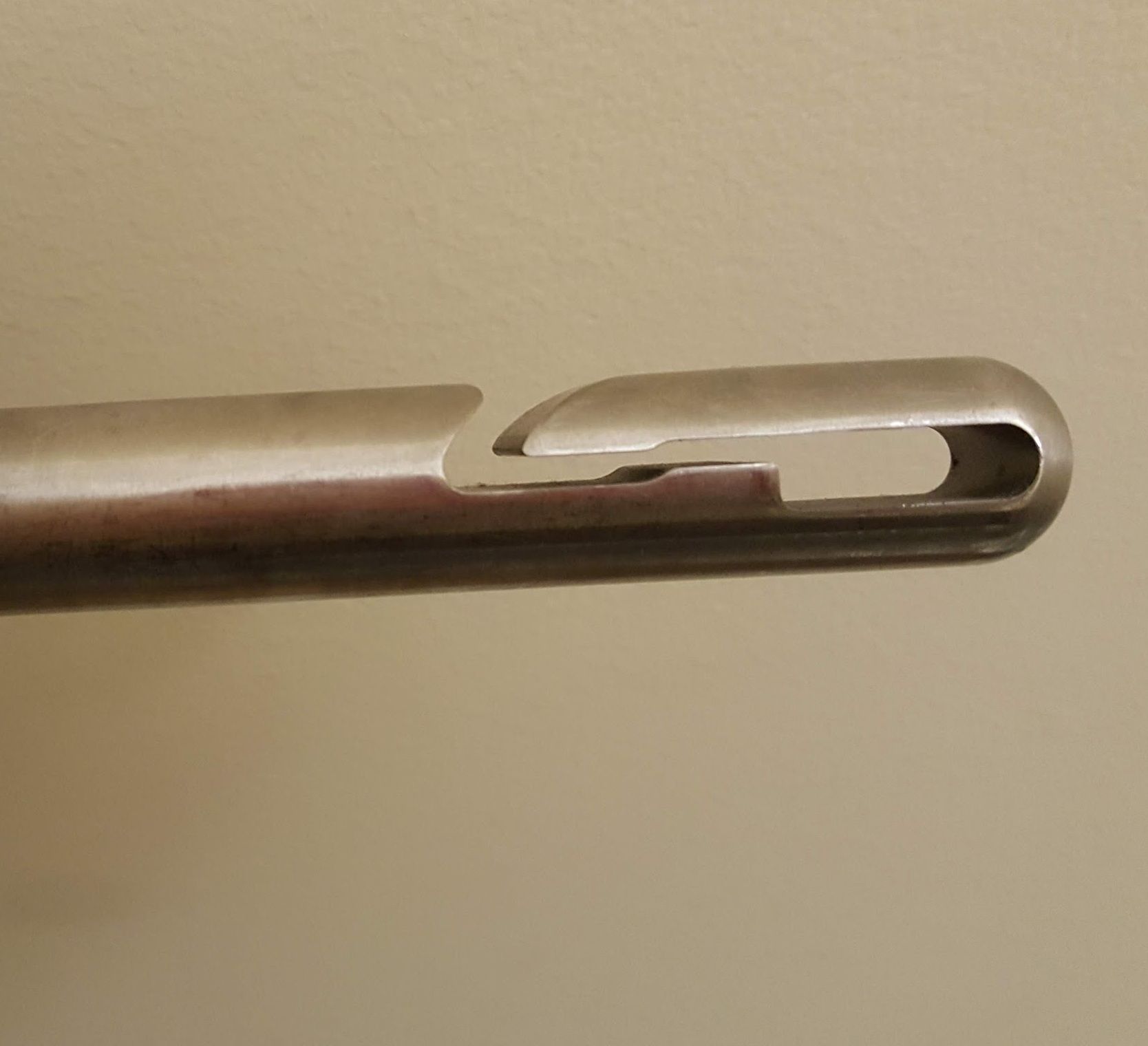
- Because threading such tiny eyes is a problem, there are even beading needles that have a slit n the center of the needle that can expand to allow larger thread into it. Spiral Eye Beading needle has a small slot on the side of the eye for the thread to slip into.
- Size 15 seed bead uses size 12 or 13 needle
- Size 11 seed bead uses size 12 needle
- Size 8 seed bead uses size 8 or 10 needle
Quilting
Shop NowQuilting requires a variety of needle types.
The name, “Quilting needles” usually refers to short thin needles that quilters use to do the “rocking stitch.” Quilting Needles are also called “Betweens”. A size 12 Between is a short size 12 sharp
- To bury thread tails, you will want a side threading needle. If you bury lots of threads, you will want a sturdier Chenille size 24 Chenille Spiral Eye Needle. If you only bury a few tails, bury them using a size 6 Spiral Eye Needle.
- Sewing on a binding? Use a Sharp needle that feels great in your hand. Often times that is a size 8 or 10. Some people like a size 12. I personally like a size 6 Spiral Eye Needle.
Yarn Projects
Shop Now- Yarn needles have much larger eyes to accommodate the heaviness of yarn.
- Yarn is made up multiple threads that fray as you try to put it into the eye so there are tricks to threading into that hole.
- You can try a Spiral Eye side threading yarn needle. It has an opening on the side of the eye, so the fraying is not an issue.
Machine Sewing
Shop NowSpiral Eye makes a Sewing Machine needle that is just as easy to thread as Spiral Eye hand sewing needles.
- Size 80/12 Universal.
Blog